
Salmon Creek Address History Sources
A reliable address history is a dated evidence ledger. Start with the Clark County parcel record and most recent sale, then move into recorded transfers and time-specific household sources. Keep separate columns for the record date, the person or entity named, and the narrow fact the source establishes. A deed records an interest or transfer. A directory reports an address entry. A permit describes work or an applicant. None alone proves that a person occupied the site for the full year.
| Source | Years It Covers | Where Held | What It Shows |
|---|---|---|---|
| Auditor Landmark index | Online 1961-present | Clark County Auditor | Parties, instrument, date, number, book/page, legal description |
| Digital Archives land records | 1998-2021 transfer | Washington Digital Archives | Indexed deeds, liens, plats, easements, and related records |
| Vancouver-area directories | Selected 1907-1934 leads | State Library and local repositories | Names, addresses, street guides, and household clues |
| Clark County census | 1850 and 1885 | Washington Digital Archives | Household members and schedule details |
| Federal census | Released through 1950 | HeritageQuest, Ancestry Library, NARA | Households and personal fields that vary by year |
| County permits | Current LMS and older Tidemark entries | PIC, LMS, or records request | Construction, alteration, demolition, status, and project dates |
For a recent Salmon Creek address, begin with the Property Information Center and Landmark. For an early twentieth-century household, a confirmed directory year may come first. Before those runs, use census, tax ledgers, deeds, church sources, newspapers, and cemetery records. Pre-1961 deeds require office help, and the 1890 courthouse fire can break the early chain.
Start the Salmon Creek Parcel
Enter the street address or a partial form in the Clark County Property Information Center. Copy the nine-digit property account number, legal description, situs address, jurisdiction, and most recent sale details. “Situs” means the physical property address. It can differ from the owner's tax-mailing address, which may be a post office box, another state, a trust office, or a different parcel.
The legal description is the key bridge. Street names and numbers can change, while lot, block, subdivision, or section-township-range wording can link an older deed to the same land. PIC also links permits, recorded documents, surveys, sales, and map information. Owner-name searching is not available on the public PIC form; the Assessor provides it on self-service computers in the Joint Lobby.
Note: A matching mailing and situs address is one clue, not final proof that the owner lived at the parcel.
Walk Clark County Deeds Backward
The Clark County Auditor Landmark search is the recorded ownership and encumbrance trail. Its web index begins January 1, 1961. Searching is free, but images are uncertified and an account is required to buy documents online. For older records, call 564-397-2208 or email recording@clark.wa.gov for Recording Department help.
- Copy the current owner, property account, legal description, and latest sale from PIC.
- Find the current acquisition deed and record its number, date, type, grantor, and grantee.
- Search the seller as a grantee to locate the deed by which that party acquired the land.
- Repeat backward while matching the legal description, not merely a similar name or street.
- At the web cutoff, request help with earlier deed books and note any fire-related gap.
- Grantor
- The person or entity giving or transferring the recorded interest.
- Grantee
- The person or entity receiving the recorded interest.
- Chain of title
- The sequence of recorded interests and transfers tied to the same land.
- Legal description
- The formal land wording used to identify a parcel beyond its street address.
Salmon Creek Deed Search Fields
Landmark supports more than a basic surname search. Use the exact party spelling from the newest confirmed deed, then widen the match only when needed. Limit by dates and document type to keep a common name from producing an unworkable result set.
| Search control | Use in the trail | Format or limit |
|---|---|---|
| Name | Locate a grantor or grantee | Last name, then first name |
| Match method | Handle variants or exact names | Starts With, Contains, Equals |
| Document category | Separate deeds from liens or loans | Choose the relevant instrument class |
| Date range | Bound an ownership period | Begin/end or quick controls |
| Book and page | Retrieve a known citation | Book type is separate |
The inspected grantor-grantee interface appears below. Its controls help distinguish a transfer deed from a mortgage, release, reconveyance, easement, lien, plat, or trustee notice.
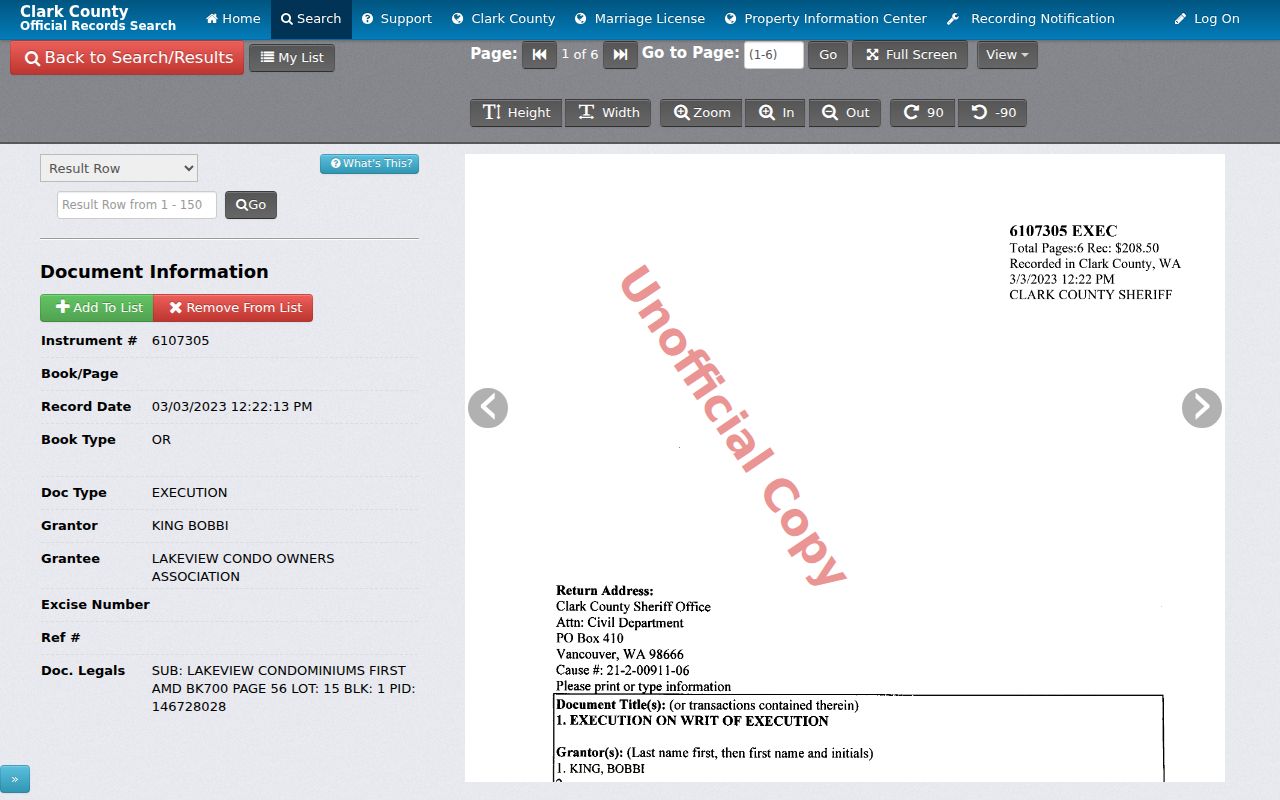
Read the instrument type before adding a person to the owner timeline. A loan or lien does not record a change of ownership by itself.
Copies for Salmon Creek History
An index row is a lead. Open its detail or image to confirm party roles, recording number, date, instrument, legal description, and related recordings. The main Landmark landing page shown below warns that its images are not certified and identifies the modern web coverage boundary.
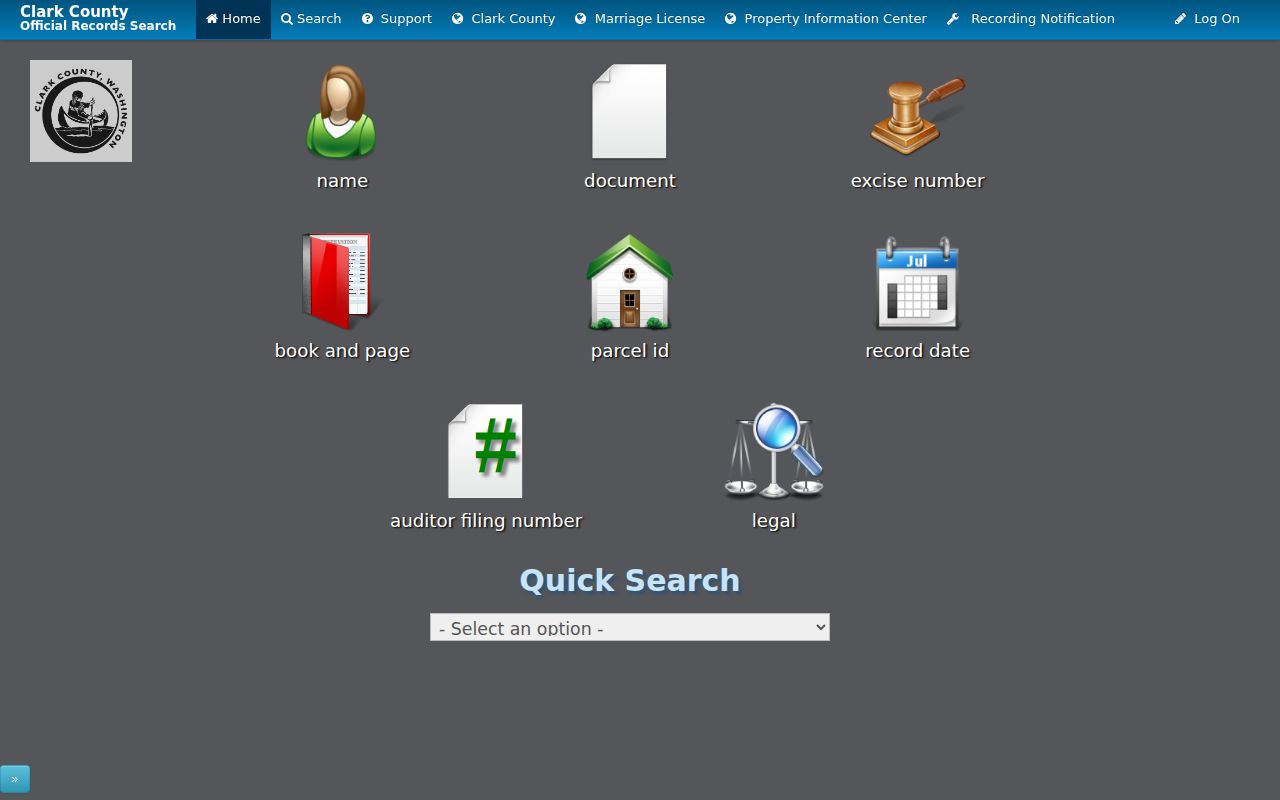
For authentication, use the Auditor's document request process. Copies are available online, in person, or by mail. The research lists noncertified copies at $1 per page and certified copies at $3 for the first page plus $1 per added page, subject to current confirmation. A certified copy is issued by the custodian, but it is not a title opinion.
Salmon Creek Permits Date Change
Clark County Community Development records can date new construction, additions, repairs, demolition, mobile-home placement, or a change of use. PIC's Permits tab combines retired Tidemark and current LMS entries and may show case type, issued date, status, and a document link. The LMS permit search offers searches by address, permit number, contractor, date, and project name.
A permit names a property event, applicant, or contractor, not every resident. Use its date to explain why an address first appears, why a structure changes on a map, or why a directory line vanishes. Older Tidemark papers that are not viewable require a focused records request. If PIC lists City of Vancouver as the jurisdiction, use Vancouver's permit route instead of assuming county control from the postal line.
The 1890 Clark County Gap
A November 1890 courthouse fire destroyed most early Clark County records. That event explains why a clean deed chain may stop before the territorial period. Mark the gap, then seek independent evidence instead of inventing a missing transfer.
The 1886 and 1891 Vancouver tax ledgers can bridge names to lot, block, and assessed value within their city scope. Their WSU and CCGS digitized collection includes images and transcripts, but a lot must be reconciled with a plat or later deed before it is tied to today's address.
The viewer below presents tax records, not household directory pages.
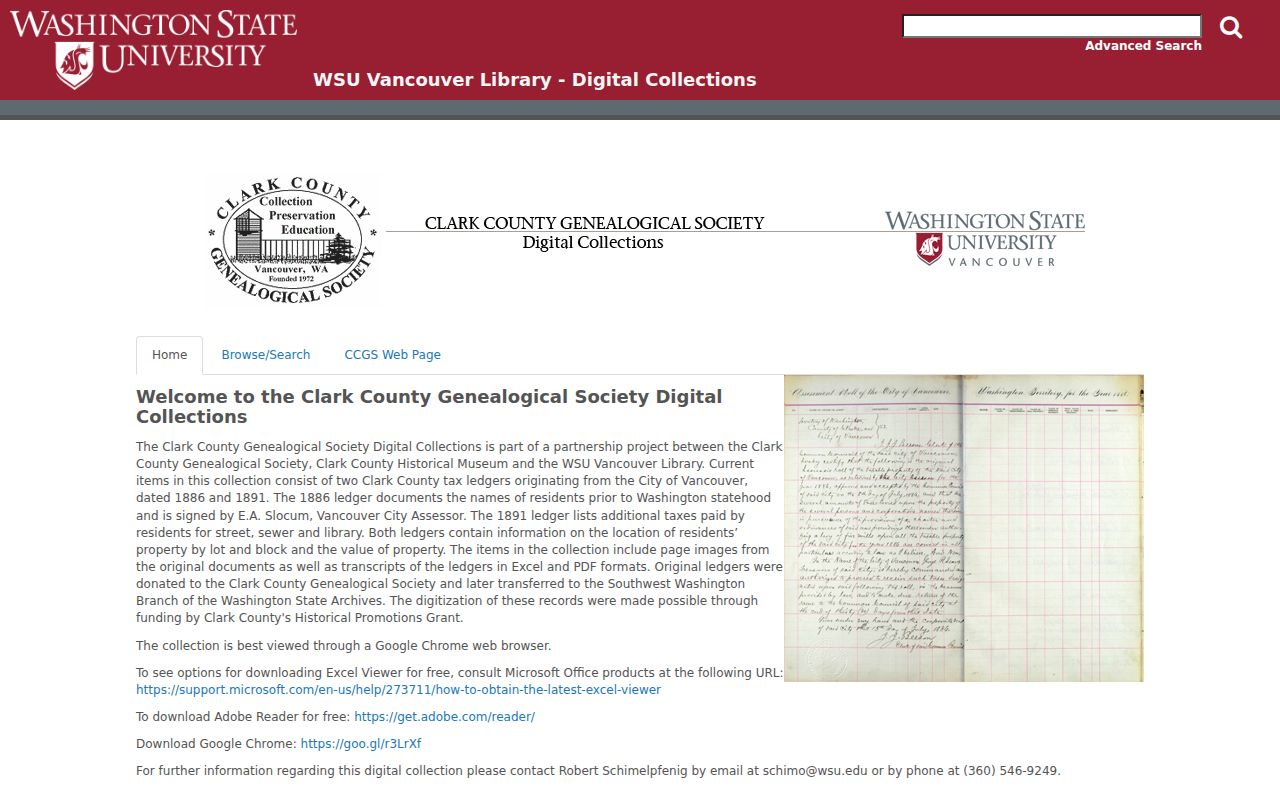
State Archives, newspapers, census schedules, church records, cemetery files, and later confirming deeds form the rest of the fallback chain.
Verify Salmon Creek Past Owners
A deed chain must be checked for continuity, parcel identity, and instrument meaning. Confirm that each seller in one transfer is the buyer in an earlier transfer, allowing for marriages, estates, trusts, and entity name changes. Keep the recording date distinct from the signing date and any sale date shown in PIC.
- Match the legal description or stable parcel reference across both deeds.
- Classify each instrument as a transfer, loan, release, easement, lien, or other event.
- Resolve initials and same-name parties with dates, spouse names, and estate or trust wording.
- Record gaps plainly and ask the Recording Department which earlier index or book may apply.
- Recording date
- The date the custodian accepted and entered an instrument, which may differ from its signing date.
- Encumbrance
- A recorded claim or burden, such as a lien or easement, that is not necessarily an ownership transfer.
- Estate deed
- A transfer involving a deceased person's estate, often paired with probate records.
Salmon Creek Past Households
Owners are only one part of previous residents research. Printed directories and census schedules can name occupants who never appear as deed grantees. The confirmed shelf years and methods are covered in the Salmon Creek city directory collections. Search a person alphabetically, then use a street guide or criss-cross section when the edition has one. Local criss-cross years were not confirmed, so verify the holding first.
Pair a directory observation with the nearest census year, while allowing for address changes and collection gaps. Washington Digital Archives provides Clark County census records for 1850 and 1885. FVRL's HeritageQuest and Ancestry Library provide released federal census images through 1950. Preserve each source's household order, age, birthplace, and relationship fields as captured.
- Start with deed owners and the historic address form.
- Search the nearest directory year for the name, rural route, and relationship.
- Compare the closest census household and test names and ages against the next dated source.
- Use newspapers, marriage and death indexes, probate, and cemetery records to explain arrivals or departures.
Obituaries and probate can connect relatives and last addresses, but they do not prove every earlier stay. A person who disappears may have moved, died, changed names, been omitted, or fallen outside the publisher's area.
Lawful use. Trace Salmon Creek previous residents for house history, family history, estate work, or personal research. Never use the trail to stalk, harass, or expose a protected living person.
Where Salmon Creek Trails Stop
No source provides a complete historic household roster. The Landmark web cutoff, courthouse fire, incomplete directory years, rural-route forms, parcel splits, and renamed or renumbered addresses can all produce a real gap. MapsOnline's taxlot, subdivision, annexation, duplicate-address, hundred-block, and directional-quadrant layers can diagnose a mismatch, but the map is not a survey or resident list.
For a missing county administrative record, submit a narrow request through Clark County's GovQA route. Under RCW 42.56.520, the county must make an initial response within five business days. It may provide records, estimate a date, seek clarification, or cite a denial. This is not a five-day production promise.
Stop if a substitute address or protected-record signal appears. Washington's Address Confidentiality Program keeps actual residential details out of ordinary public voter and marriage records for qualified participants. Do not reverse-geocode or triangulate a protected address. A documented research gap is more accurate, and safer, than a guessed identity.